


Emergency AC Repair Orlando – 24 Hour Air Conditioning Service
Living in Orlando means dealing with intense heat and humidity for most of the year. When your air conditioner suddenly stops working, it is more than just uncomfortable. A broken cooling system can quickly make your home unbearable during the Florida heat.
Cool Solutions of Central Florida provides fast and dependable emergency AC repair in Orlando when homeowners need help the most. Our experienced technicians respond quickly to diagnose issues and restore comfort so your home stays cool and safe.
Whether your system stops working late at night, over the weekend, or during the hottest day of summer, our team is ready to provide reliable 24 hour AC repair in Orlando.
Why Homeowners Choose Our Orlando AC Repair Service
When your cooling system fails, you need a company that can respond quickly and fix the issue correctly the first time. Cool Solutions of Central Florida has built a reputation as one of the best HVAC companies Orlando homeowners trust.
Our team provides fast emergency air conditioner repair in Orlando along with honest diagnostics and dependable solutions. We service all major HVAC brands and work hard to deliver long lasting repairs that restore comfort quickly.
- Fast response for emergency AC repair Orlando homeowners depend on
- Experienced technicians trained on all major HVAC systems
- Reliable solutions that fix the problem properly
- Professional service and clear communication
- Full service heating and cooling support
Common Air Conditioning Emergencies We Repair
Air conditioning systems in Central Florida run nearly year round, which can lead to sudden failures when components wear out or systems become overworked.
Our technicians regularly respond to emergency calls for problems such as:
- AC blowing warm air
- Air conditioner not turning on
- Frozen evaporator coils
- Refrigerant leaks
- Electrical or capacitor failures
- Clogged condensate drain lines
- Thermostat malfunctions
- Loud or unusual noises coming from the unit
If your system stops cooling your home, our team can quickly diagnose the issue and provide professional Orlando AC repair service.
24 Hour AC Repair Orlando Residents Can Depend On
Cooling emergencies can happen at any time. That is why our technicians are available to provide 24 hour AC repair in Orlando when homeowners experience unexpected breakdowns.
Our technicians arrive prepared with the tools and equipment needed to identify the problem and restore cooling quickly. Many issues can be repaired during the same visit.
When you call Cool Solutions of Central Florida for emergency AC repair Orlando homeowners can expect fast service, accurate diagnostics, and dependable repair solutions.
Complete HVAC Services in Orlando
In addition to emergency repairs, our company offers a full range of heating and cooling services to keep your system operating efficiently throughout the year.
AC Repair Orlando
If your cooling system is struggling to maintain temperature, making unusual noises, or running constantly, our technicians provide reliable AC Orlando repair services to restore system performance.
Heat Pump Repair Orlando
Many Florida homes rely on heat pump systems for both heating and cooling. Our technicians provide dependable heat pump repair Orlando homeowners trust when their systems stop working properly.
Furnace Repair Orlando FL
Although winters are mild, many homes still use heating systems during colder weather. Our technicians also provide furnace repair Orlando FL services when heating equipment needs attention.
AC Installation Orlando
If your system is older or cannot be repaired, our team offers professional AC installation Orlando homeowners rely on for energy efficient cooling systems.
New AC System Orlando
Installing a new AC system Orlando homeowners can rely on improves energy efficiency, indoor comfort, and long term system reliability.
Ductless Air Conditioning Orlando
Ductless air conditioning Orlando systems are ideal for homes without ductwork or for room additions where traditional systems may not be practical.
Prevent Emergency Repairs With AC Maintenance
Many emergency AC failures occur because systems are not regularly serviced. Routine maintenance helps identify small issues before they become expensive breakdowns.
Our AC tune up Orlando FL service includes inspection, cleaning, and testing of system components to ensure everything operates efficiently.
Preventative maintenance can extend the life of your HVAC system, improve energy efficiency, and reduce the chances of sudden failures during Orlando’s hottest months.
Signs You May Need Emergency AC Repair
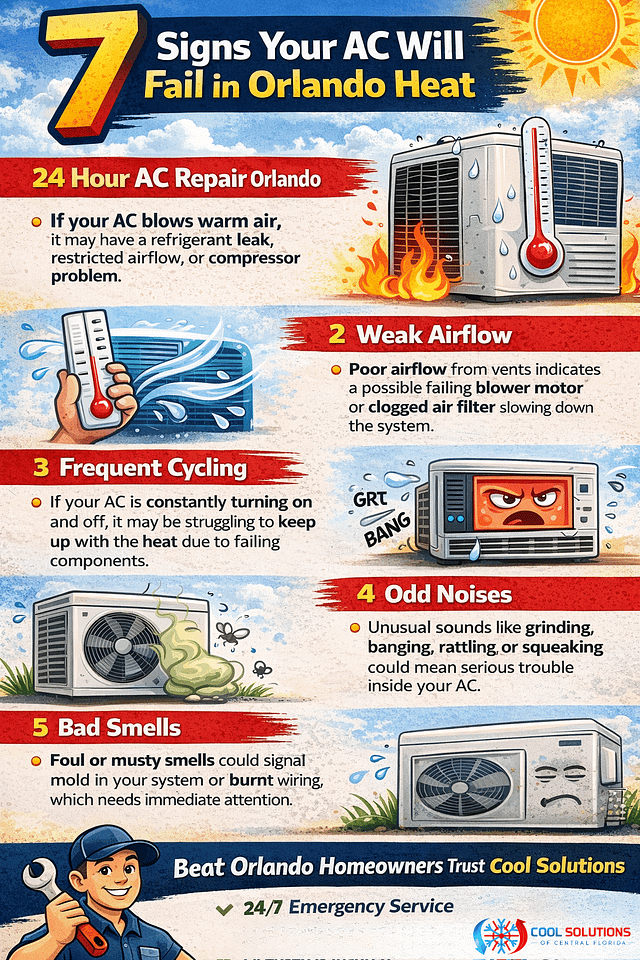
Some HVAC issues require immediate attention. If you notice any of the following signs, it may be time to contact an HVAC technician right away.
- Your air conditioner stops working completely
- Your home becomes excessively hot
- Burning or electrical smells from the unit
- Water leaking around the system
- Loud grinding or banging sounds
- The system repeatedly trips the circuit breaker
If you are unsure whether your situation requires emergency service, our technicians can evaluate the problem and help determine the best solution.
Orlando Air Conditioning Experts
Cool Solutions of Central Florida provides professional heating and cooling services throughout the Orlando area. Our technicians are experienced in diagnosing complex HVAC issues and delivering solutions that restore comfort quickly.
As trusted Orlando air conditioning experts, we focus on dependable repairs, honest service, and long lasting results for homeowners across Central Florida.
Call for Emergency AC Repair Orlando Homeowners Trust
If your air conditioner suddenly stops working, do not wait for the problem to get worse. Contact Cool Solutions of Central Florida for fast and dependable emergency AC repair in Orlando.
Our experienced technicians are ready to diagnose the issue and restore cooling so your home stays comfortable.
Emergency AC Repair Orlando FAQ
What qualifies as an AC emergency?
An AC emergency typically occurs when your system stops working during extreme heat, produces burning smells, leaks water excessively, or makes loud mechanical noises. In Orlando’s hot climate, a broken air conditioner can quickly make a home uncomfortable or unsafe.
Do you offer 24 hour AC repair in Orlando?
Yes. Cool Solutions of Central Florida offers 24 hour AC repair in Orlando so homeowners can get fast help when their cooling system fails unexpectedly.
How quickly can a technician arrive for emergency AC repair?
Response times vary depending on location and service demand, but our technicians work to respond quickly and often diagnose and repair the problem during the same visit.
What are the most common reasons an air conditioner stops working?
Common causes include refrigerant leaks, capacitor failure, clogged drain lines, thermostat issues, frozen coils, and electrical problems within the HVAC system.
Can you repair all brands of air conditioning systems?
Yes. Our technicians are trained to service and repair most major air conditioning brands including central air systems, heat pumps, and ductless air conditioning units.
Should I turn off my AC if it stops cooling?
If your air conditioner stops cooling or begins making unusual noises, turning the system off can help prevent further damage while waiting for a technician.
Do emergency AC repairs cost more?
Emergency HVAC services may involve additional service fees depending on the time and urgency of the repair, but addressing the problem quickly can prevent more expensive system damage.
How can I prevent emergency AC repairs?
Routine HVAC maintenance and regular AC tune ups help identify worn components, airflow problems, and refrigerant issues before they lead to unexpected system breakdowns.