Emergency AC Repair Orange City

Emergency AC Repair in Orange City, Florida

When your air conditioner stops working in Orange City, Florida, comfort can disappear fast. Between the heat, humidity, and long cooling season in Central Florida, a broken AC system is more than an inconvenience. It can quickly become an urgent problem for your home and family. Cool Solutions of Central Florida provides emergency AC repair in Orange City for homeowners who need fast diagnostics, clear answers, and dependable air conditioning repair when their system is no longer keeping up.

Whether your AC is blowing warm air, leaking water, making strange noises, freezing up, short cycling, or not turning on at all, our goal is to find the source of the issue and help restore your comfort as quickly as possible. We understand that homeowners searching for emergency AC repair in Orange City are not looking for vague advice. They need a local HVAC team that can respond, diagnose the problem, and explain the best repair options in plain language.

emergency residential ac repair orange city florida

Fast Emergency AC Repair for Orange City Homes

Air conditioning problems rarely happen at a convenient time. A capacitor can fail during the hottest part of the day. A clogged drain line can create water around the indoor unit. A thermostat issue can leave the system unresponsive. A refrigerant problem can cause the unit to run constantly without cooling the home. When these issues happen, Cool Solutions of Central Florida is here to help Orange City homeowners get the right solution without unnecessary confusion.

Emergency AC repair starts with accurate troubleshooting. Instead of guessing, a technician should inspect the system, test electrical components, check airflow, evaluate thermostat operation, inspect the drain line, and look for signs of refrigerant or coil-related issues. A proper diagnosis helps prevent repeat breakdowns and gives you a clearer understanding of whether the system needs a simple repair, a more involved component replacement, or a larger conversation about long-term performance.

Signs You Need Emergency Air Conditioning Repair

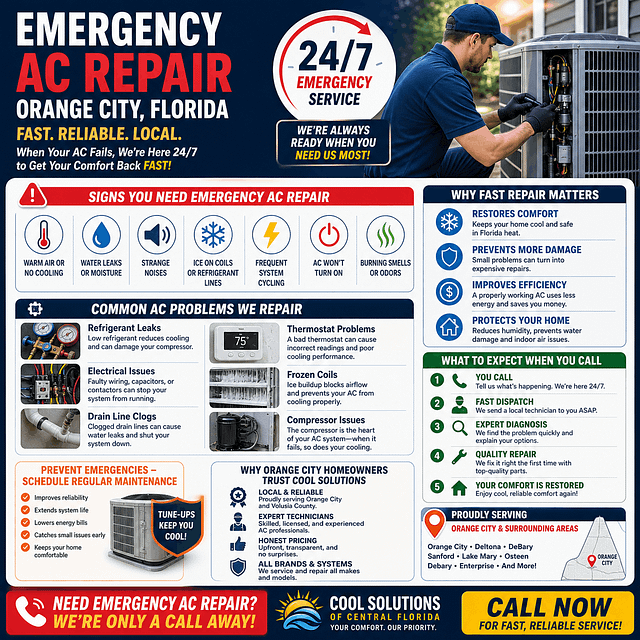
Some AC issues can wait for a scheduled service appointment, but others should be handled quickly. If your air conditioner stops cooling during extreme heat, produces a burning smell, leaks heavily, makes loud mechanical noises, or repeatedly trips the breaker, it is smart to call for emergency AC repair. These symptoms may point to electrical problems, failing components, refrigerant issues, drainage problems, or system strain that can become more expensive if ignored.

Other warning signs include weak airflow, warm air coming from the vents, ice on the refrigerant lines or evaporator coil, short cycling, unusual humidity inside the home, or a system that runs all day but never reaches the thermostat setting. In Orange City’s climate, these problems can make the home uncomfortable quickly and may place added stress on the equipment.

Common AC Problems We Repair in Orange City, FL

Emergency AC calls often involve a handful of common system failures. Cool Solutions of Central Florida can help diagnose and repair issues such as failed capacitors, damaged contactors, faulty thermostats, clogged condensate drain lines, frozen evaporator coils, refrigerant leaks, blower motor problems, compressor-related concerns, dirty condenser coils, electrical faults, and airflow restrictions. These problems can affect central air conditioners, heat pumps, and ductless mini split systems.

Because air conditioners in Central Florida run for much of the year, even small issues can become major breakdowns if they are not addressed. A dirty coil can reduce efficiency and cooling performance. A clogged drain line can lead to water damage. A weak capacitor can prevent the system from starting correctly. Low refrigerant can cause poor cooling and may indicate a leak. Proper repair service focuses on the root cause, not just the symptom.

Why Prompt AC Repair Matters in Orange City

When an air conditioner fails in Orange City, the temperature inside the home can rise quickly. Humidity can also build up, making the space feel even warmer and less comfortable. Fast AC repair helps protect your comfort, reduce system strain, and limit the risk of additional damage. If the unit continues running while something is wrong, the problem can sometimes spread to other parts of the system.

For example, poor airflow can contribute to frozen coils. Electrical issues can damage related components. Drainage problems can create moisture issues around the indoor unit. A system that is constantly running without cooling may be wasting energy while still failing to keep the house comfortable. Calling for service early can help avoid a larger and more expensive repair.

What to Expect During an Emergency AC Service Call

When you schedule emergency AC repair with Cool Solutions of Central Florida, the process is designed to be straightforward. We start by gathering information about what the system is doing, when the problem began, and whether you have noticed noises, smells, leaks, ice, poor airflow, or thermostat issues. Once on site, the system is inspected carefully so the technician can identify the cause of the failure.

After the diagnosis, you should receive a clear explanation of the issue and practical repair options. If the repair can be completed during the visit, the goal is to restore cooling as quickly as possible. If the system needs a specific part or if the repair raises larger concerns about age, efficiency, or reliability, those details should be discussed honestly so you can make the right decision for your home.

Repairing All Major AC System Types

Homes in Orange City may rely on different types of cooling systems, including traditional central air conditioners, heat pumps, and ductless systems. Each system has its own repair considerations, but the goal remains the same: restore dependable cooling and help the equipment operate safely and efficiently. Cool Solutions of Central Florida can help with common repair needs involving indoor air handlers, outdoor condensing units, thermostats, drain systems, electrical components, coils, refrigerant lines, and airflow concerns.

If your system is older, has needed repeated repairs, or has struggled to keep up with the heat, we can also help you understand whether repair still makes sense or whether replacement should be considered. Emergency service should not feel like a sales pitch. It should give you real information and a clear path forward.

Should You Repair or Replace Your AC?

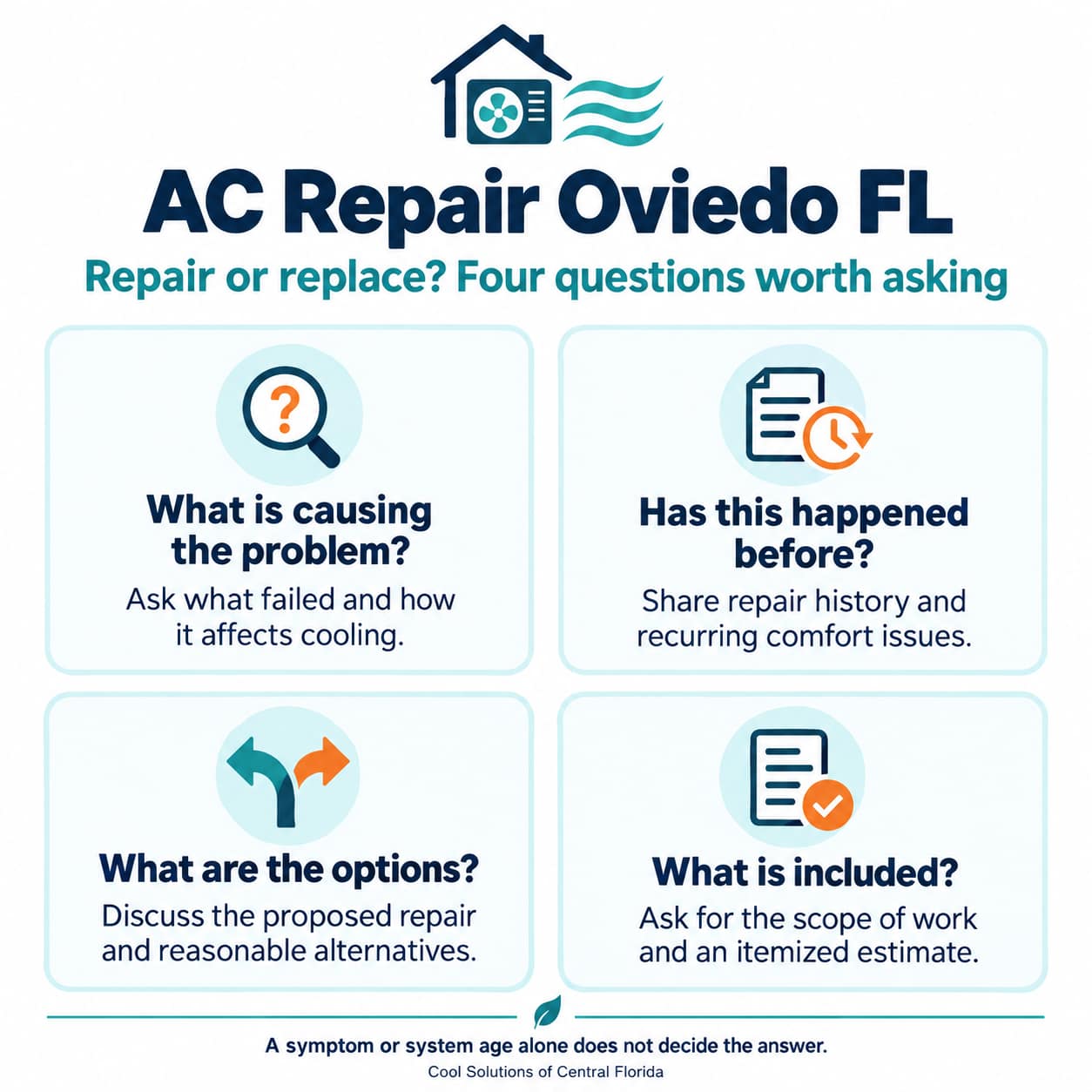
Many homeowners call for emergency AC repair and then wonder whether it is worth fixing the system. The answer depends on the age of the unit, the cost of the repair, the condition of major components, the system’s efficiency, and how often it has broken down in the past. If the issue is minor and the system is otherwise in good condition, repair may be the best choice. If the unit is older and has a history of expensive repairs, replacement may provide better long-term value.

Cool Solutions of Central Florida helps homeowners weigh those options with practical guidance. We look at the current problem, the overall condition of the equipment, and your comfort goals. If a repair is reasonable, we will explain it. If replacement deserves consideration, we will explain why. The goal is to help you make a confident decision without pressure.

How Maintenance Helps Prevent Emergency AC Breakdowns

One of the best ways to reduce surprise AC failures is regular maintenance. A professional tune-up can help identify weak electrical components, clogged drain lines, dirty coils, restricted airflow, refrigerant concerns, and performance issues before they cause a full breakdown. In Orange City, where cooling systems deal with heat and humidity for much of the year, preventive maintenance can make a meaningful difference in reliability.

Changing filters regularly, keeping outdoor units clear of debris, watching for changes in airflow, and scheduling seasonal inspections can all help protect your system. If your AC has already needed emergency repair, maintenance becomes even more important because it can help catch the next issue before it becomes urgent.

Local AC Repair Help for Orange City and Central Florida

Cool Solutions of Central Florida serves homeowners who want responsive service, honest communication, and practical solutions for their cooling systems. If you are searching for emergency AC repair in Orange City, Florida, you likely need help quickly and want to know that the repair will be handled correctly. Our team focuses on diagnosing the issue, explaining your options clearly, and helping restore your indoor comfort.

From no-cool calls and thermostat problems to leaking units, frozen coils, electrical issues, and poor airflow, we are here to help Orange City homeowners get dependable air conditioning service when it matters most.

Schedule Emergency AC Repair in Orange City, FL

If your air conditioner is not cooling, has stopped working, or is showing signs of a serious problem, do not wait for the issue to get worse. Cool Solutions of Central Florida provides emergency AC repair in Orange City, Florida for homeowners who need fast, reliable help. Contact us today to schedule service and get your comfort back on track.

Frequently Asked Questions About Emergency AC Repair in Orange City, Florida

What counts as an AC emergency?

An AC emergency usually involves a complete loss of cooling, warm air during extreme heat, burning smells, electrical issues, heavy leaking, loud mechanical noises, frozen coils, or any problem that may cause additional damage if the system keeps running.

Do you offer emergency AC repair in Orange City, FL?

Yes. Cool Solutions of Central Florida provides emergency AC repair in Orange City for homeowners dealing with unexpected air conditioning failures, poor cooling, leaks, system shutdowns, and other urgent comfort problems.

Why is my AC running but not cooling my house?

An AC that runs but does not cool may have low refrigerant, restricted airflow, a dirty coil, thermostat problems, electrical issues, or a failing component inside the system. A professional inspection can identify the true cause.

Should I turn off my AC if it is leaking or frozen?

Yes, turning the system off can help prevent additional damage if the unit is leaking heavily or frozen. It is best to call for professional service so the cause can be diagnosed before the system is restarted.

What are the most common emergency AC repairs?

Common emergency AC repairs include capacitor replacement, contactor repair, thermostat troubleshooting, drain line clearing, refrigerant leak diagnosis, blower motor repair, coil service, and electrical component repair.

Can you repair all brands of air conditioners?

Most professional HVAC technicians service a wide range of central air conditioners, heat pumps, and ductless mini split systems from major brands. The repair process starts with diagnosing the system and identifying the failed component.

How do I know if I should repair or replace my AC?

If the system is newer and the repair is minor, repair may be the best choice. If the unit is older, inefficient, or breaking down repeatedly, replacement may be more cost-effective over time. A technician can help you compare both options.

How can I prevent emergency AC problems?

Regular maintenance, filter changes, drain line checks, coil cleaning, and early attention to unusual noises, weak airflow, or poor cooling can help prevent many emergency AC breakdowns.

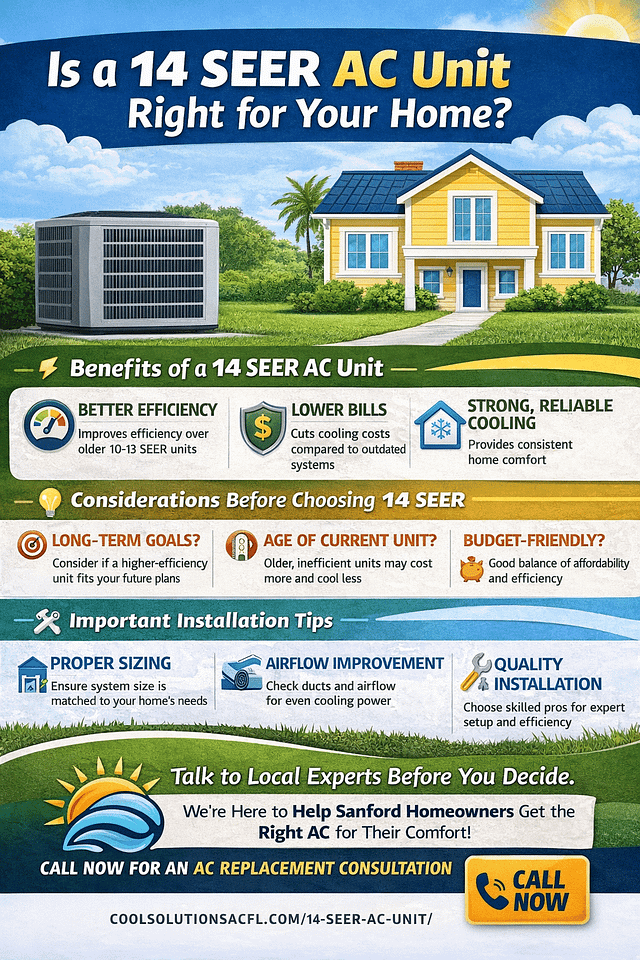
14 Seer AC Unit

14 SEER AC Unit Explained

If you are researching a 14 SEER AC unit for your home, you are probably trying to balance three things at once: comfort, monthly energy use, and upfront cost. That is exactly where many homeowners start. A 14 SEER AC unit is often searched by people looking for a dependable central air conditioning system that delivers better efficiency than much older equipment without immediately jumping to the highest-priced option on the market. At Cool Solutions of Central Florida, we help homeowners understand what a 14 SEER AC unit means, when it makes sense, and what to consider before replacing an aging air conditioner.

Choosing a new air conditioner is not just about the number on the label. The right system for your home depends on square footage, insulation, ductwork, thermostat performance, indoor air flow, humidity levels, and how hard your current system has to work during long cooling seasons. That is why our team takes a practical approach. We help homeowners compare efficiency, comfort, equipment compatibility, and long-term value so they can make a confident decision rather than guess.

What Is a 14 SEER AC Unit?

SEER stands for Seasonal Energy Efficiency Ratio. In simple terms, it is a way to measure how efficiently an air conditioner cools over a typical season. When homeowners search for a 14 SEER AC unit, they are usually looking for a central air system that offers a solid middle ground between older, less efficient air conditioners and more premium high-efficiency models. For many households, the goal is not to buy the most expensive system available. It is finding an air conditioner that cools reliably, runs efficiently, and fits the home’s actual needs.

A 14 SEER AC unit can be a familiar benchmark in the market because many older systems being replaced today are significantly less efficient. If your current unit is older, struggling to keep up, short-cycling, or driving up your electric bill, even a more modern system design can improve day-to-day comfort, airflow, and cooling consistency. The most important part is making sure the system is properly matched and professionally installed.

Why Homeowners Search for 14 SEER AC Units

Homeowners searching this keyword are usually comparing values. They want to know whether a 14 SEER AC unit is good enough, whether it will lower energy costs compared to an older system, and whether it is the right fit. These are good questions. In many homes, the answer depends less on a single number and more on the full installation. A properly sized and well-installed air conditioner with the right coil, thermostat setup, duct performance, and airflow calibration will usually outperform a poorly installed system with a higher paper rating.

That is why this conversation should always include more than just efficiency. You also want to consider how long you plan to stay in the home, how often your AC runs, whether you have hot spots or uneven cooling, and whether your ductwork or insulation is contributing to comfort problems. A replacement should solve problems, not just swap equipment.

Is a 14 SEER AC Unit a Good Choice for Your Home?

For many homeowners, a 14 SEER AC unit represents a starting point for comparing budget, efficiency, and comfort. Air conditioners work hard for much of the year, so your cooling system needs to be more than affordable. It needs to be dependable under heavy demand. If your current unit is older and inefficient, replacing it with a properly selected modern system can improve comfort, reduce strain, and help stabilize energy usage compared to what you are living with now.

The bigger question is whether a 14 SEER AC unit is the best overall fit for your specific home. Some homeowners prioritize the lowest possible upfront cost. Others want better humidity control, quieter operation, or stronger long-term energy savings. That is why our team helps you compare options based on your house, your comfort expectations, and your budget. The right answer is not always the same from one property to the next.

14 seer ac unit

14 SEER AC Unit vs. Higher Efficiency Options

One of the most common questions homeowners ask is whether to stick with a 14 SEER AC unit or upgrade to a higher-efficiency option. The answer depends on your goals. A 14 SEER system may appeal to homeowners looking for a practical, budget-conscious replacement. Higher-efficiency systems may make sense for homeowners who plan to stay in the house for many years, want lower operating costs over time, or are looking for upgraded comfort features such as improved staging, variable-speed operation, or enhanced humidity control.

What matters most is understanding the tradeoff. A lower efficiency option may reduce upfront investment. A higher efficiency option may improve long-term savings and indoor comfort. During an estimate, we help you compare those choices honestly so you can decide what works best for your household, rather than being pushed toward a one-size-fits-all recommendation.

What Affects the Total Cost of a 14 SEER AC Unit?

When homeowners search for the cost of a 14 SEER AC unit, they often expect one simple number. In reality, the final investment depends on more than the outdoor condenser. System size, indoor coil compatibility, air handler or furnace pairing, refrigerant type, electrical updates, drain line work, thermostat upgrades, duct modifications, and labor all affect the total price. The age and condition of the existing system also matter. If the installation requires more extensive adjustments, the total project scope changes.

This is why a quick online price for a single piece of equipment does not tell the whole story. The better way to evaluate value is to look at the complete installation and ask whether the new system is properly sized, correctly matched, and set up to perform efficiently in your home. That is where professional guidance makes the biggest difference.

Signs It May Be Time to Replace Your Current AC

If you are researching a 14 SEER AC unit, there is a good chance your current system is already showing signs of age. Maybe it struggles to cool the home evenly. Maybe it runs constantly on hot days, makes unusual noises, needs frequent repairs, or causes utility bills to climb. In some homes, the issue is not total failure. It is a declining performance that slowly chips away at comfort month after month.

Common warning signs include weak airflow, uneven temperatures between rooms, excess indoor humidity, rising repair bills, warm air from vents, short cycling, frozen coils, or a unit that simply cannot keep up with heat and humidity anymore. If any of that sounds familiar, it may be time to compare replacement options and decide whether repairing the old system still makes sense.

Why Proper Sizing Matters More Than Most Homeowners Realize

One of the biggest mistakes in AC replacement is focusing solely on efficiency while overlooking system sizing. An oversized unit can cycle on and off too quickly, which may reduce humidity control and create uneven comfort. An undersized unit may run constantly and still fail to cool properly. A quality AC replacement starts with evaluating the home, not guessing based on the old equipment tag.

At Cool Solutions of Central Florida, we assess the property’s real cooling needs. That includes layout, square footage, insulation, sun exposure, airflow, and how the home actually performs during the hottest months. The goal is not just installing a new unit. The goal is delivering comfort that feels right throughout the house.

Installation Quality Can Make or Break Performance

Even the best equipment can disappoint if the installation is rushed or incomplete. Refrigerant charge, airflow settings, line set condition, thermostat calibration, condensate management, and duct performance all influence how a new air conditioner performs. Homeowners often focus on brand and efficiency first, but installation quality is what turns a replacement into a comfort upgrade.

That is why we emphasize professional setup, clear communication, and realistic expectations. When your system is installed correctly, you are more likely to get the dependable cooling, energy performance, and system longevity you are paying for. That matters even more in hotter regions, where air conditioners do real work for much of the year.

14 SEER AC Unit Installation

Cool Solutions of Central Florida helps homeowners compare air conditioning replacement options with a practical, local perspective. We understand the challenges that come with heat, humidity, and extended cooling seasons. Whether you are replacing an outdated system, planning ahead before a full breakdown, or comparing efficiency options for a home you just purchased, we can help you evaluate what makes sense for your goals.

Our approach is simple: listen to what is not working, inspect the system and home conditions, and recommend solutions that match your comfort needs and budget. Some homeowners may be focused on a 14 SEER AC unit because they want a cost-conscious replacement path. Others may discover that another efficiency tier or system setup offers better long-term value. Either way, our job is to help you make an informed decision.

Why Homeowners Choose Cool Solutions of Central Florida

Choosing a new AC system can feel overwhelming because there are so many numbers, model options, and opinions online. Homeowners choose Cool Solutions of Central Florida because they want guidance that feels clear, local, and honest. We take the time to explain what matters, what may not matter as much, and how different equipment options align with your home and budget.

If you are comparing a 14 SEER AC unit, our team can help you move from online research to a real-world recommendation. We focus on dependable service, straightforward communication, and comfort solutions designed for homes. That means fewer surprises, better planning, and a replacement process built around what actually works for your household.

Schedule an Estimate for a 14 SEER AC Unit

If you are researching a 14 SEER AC unit and want help comparing your options, Cool Solutions of Central Florida is here to help. We work with homeowners and surrounding Central Florida communities who want practical answers about AC replacement, system efficiency, and long-term comfort. Reach out today to schedule an estimate and find the right cooling solution for your home.

Frequently Asked Questions About 14 SEER AC Units

What does 14 SEER mean on an AC unit?

It refers to the Seasonal Energy Efficiency Ratio, a standard measure of how efficiently an air conditioner cools over a season. Homeowners often use it as a starting point when comparing central AC systems.

Is a 14 SEER AC unit good for a home?

It can be a practical option depending on the home, budget, and installation goals. The better question is whether the complete system setup is the right fit for your property, comfort expectations, and current efficiency standards.

Will a 14 SEER AC unit lower my electric bill?

If you are replacing an older, less efficient system, a newer, properly installed AC system may improve efficiency and cooling performance. Actual savings depend on the age of your old equipment, home conditions, thermostat habits, ductwork, and runtime.

How much does a 14 SEER AC unit cost?

Total cost depends on system size, indoor equipment compatibility, installation requirements, duct or electrical modifications, thermostat upgrades, and labor. The best way to get an accurate number is with a full in-home estimate.

Is a 14 SEER AC unit better than repairing an older system?

That depends on the age and condition of the current unit, the cost of repairs, and how often the system breaks down. If repairs are becoming frequent or performance is declining, replacement may offer better value.

What size 14 SEER AC unit do I need?

The right size depends on the home’s square footage, insulation, layout, windows, sun exposure, airflow, and other load factors. Sizing should be based on the home, not on guesswork or the size of the old system alone.

Can a 14 SEER AC unit help with humidity control?

Humidity performance depends on more than the efficiency rating. Proper sizing, airflow, thermostat settings, and the overall system design all influence how well your home controls indoor moisture.

Should I choose a 14 SEER AC unit or a higher efficiency model?

That depends on your priorities. If you want a more budget-conscious upfront option, a 14-SEER search may be where to start. If you want stronger long-term energy savings or enhanced comfort features, a higher-efficiency system may be worth comparing.

Emergency AC Repair Sanford

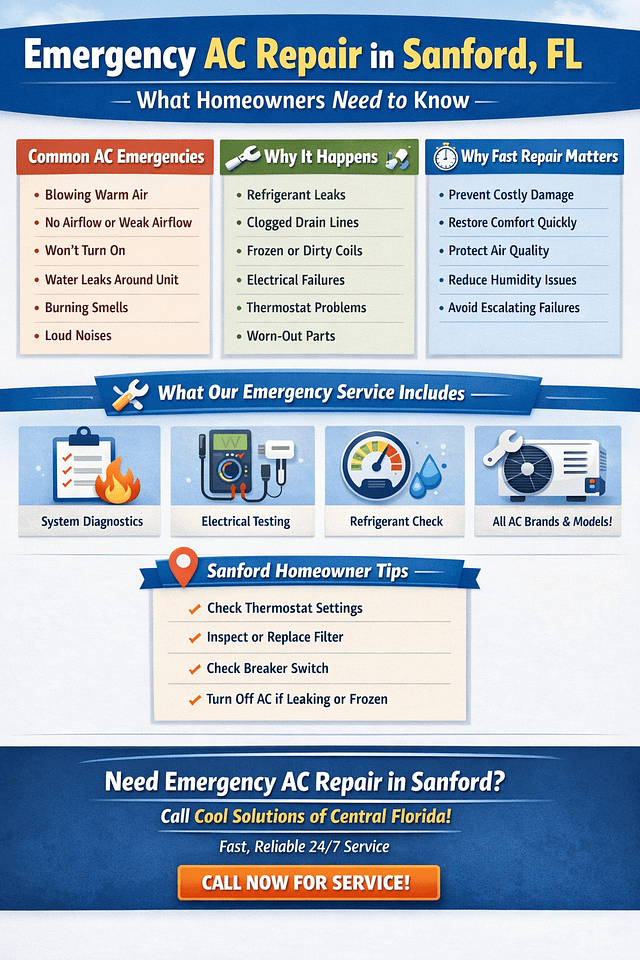
Emergency AC Repair in Sanford, Florida

When your air conditioner quits in the middle of a hot Sanford day or a humid Florida night, you need more than a temporary fix. You need fast answers, honest recommendations, and an HVAC team that understands how quickly indoor comfort can disappear in Central Florida. Cool Solutions of Central Florida provides emergency AC repair in Sanford, Florida for homeowners who need prompt service when the cooling stops, airflow drops, warm air starts blowing, or strange sounds and smells turn a normal day into a stressful one.

In Sanford, air conditioning is not a luxury for most families. It is part of what keeps your home comfortable, protects indoor air quality, and helps your household function normally. If your system fails suddenly, starts short cycling, leaks water, freezes up, or trips the breaker, it is important to have the problem diagnosed before it turns into larger damage. Our goal is to identify the issue quickly, explain what is happening in plain language, and get your system back to reliable operation as soon as possible.

24 Hour AC Repair for Sanford Homeowners

Emergency air conditioning problems do not always happen during normal business hours. A failing capacitor, refrigerant issue, clogged drain line, electrical problem, damaged contactor, failing blower motor, or thermostat malfunction can show up late at night, over the weekend, or right before guests arrive. That is why Cool Solutions of Central Florida offers responsive emergency AC repair in Sanford with service focused on urgency, safety, and lasting results.

Our technicians diagnose the root cause of the problem, not just the symptom. If your AC is running but not cooling, we look deeper at refrigerant levels, airflow restrictions, dirty coils, frozen evaporator components, thermostat communication, and electrical performance. If your system will not turn on at all, we inspect the power supply, breakers, disconnect, wiring, capacitors, contactors, and control components to find the true source of the breakdown. That approach helps reduce guesswork and supports a repair you can trust.

Signs You Need Emergency Air Conditioner Repair

Not every AC problem starts with a total shutdown. Many Sanford homeowners notice warning signs before the system completely fails. If you catch the issue early, you may be able to prevent more serious damage and restore comfort faster. Call for emergency AC repair if your unit is blowing warm air, the airflow feels weak, the thermostat is not keeping up, your home feels sticky or unusually humid, the system is making banging or screeching noises, or you notice burning smells, water around the indoor unit, or ice building up on the equipment.

Another common warning sign is a system that runs constantly without cooling the house properly. That may point to low refrigerant, a dirty coil, a failing compressor component, restricted airflow, or duct-related issues. If your electric bill suddenly jumps without a clear reason, your air conditioner may be losing efficiency as it struggles to perform. In Sanford’s climate, those warning signs should not be ignored.

Common AC Problems We Repair in Sanford, FL

Emergency AC repair calls in Sanford often involve a familiar group of system failures. We regularly diagnose and repair refrigerant leaks, frozen evaporator coils, clogged condensate drain lines, failed capacitors, damaged contactors, broken blower motors, compressor issues, thermostat malfunctions, electrical faults, sensor problems, dirty condenser coils, and airflow restrictions caused by filters or duct issues. Whether your system is a traditional central air conditioner, a heat pump, or a ductless mini split, our team works to restore dependable cooling with solutions tailored to the actual condition of your equipment.

Because Central Florida systems work hard for much of the year, emergency breakdowns can happen from a combination of wear, heat load, humidity, deferred maintenance, and aging components. Some repairs are straightforward. Others reveal deeper concerns about system health, efficiency, or remaining lifespan. If a repair makes sense, we will tell you. If the system is nearing the point where replacement is the smarter investment, we will explain that clearly too.

Why Fast AC Repair Matters in Sanford

Sanford homeowners know how quickly a house can become uncomfortable when the air conditioner goes down. High humidity can make rooms feel hotter than the thermostat reading suggests, and poor cooling can affect sleep, concentration, indoor air quality, and everyday routines. In some situations, extended AC failure can also contribute to moisture problems, especially if your system is leaking or not removing humidity the way it should.

Prompt repair service can help prevent a smaller mechanical issue from becoming a more expensive system failure. A clogged drain line can lead to water damage. A failing capacitor can strain other components. Restricted airflow can contribute to frozen coils and compressor stress. Getting professional diagnostics early is often the best step toward protecting both your comfort and your equipment.

What to Expect During Your Emergency AC Service Call

When you contact Cool Solutions of Central Florida for emergency AC repair in Sanford, we focus on making the process simple and straightforward. We begin by gathering details about what your system is doing, whether it has stopped entirely, and whether there are any signs of leaking, odors, noises, or electrical concerns. Once on site, we inspect the system, test key components, verify system performance, and determine the cause of the issue.

After diagnosis, we explain the problem in plain English and review your repair options. If the fix can be completed during the visit, we work to restore cooling as quickly as possible. If a larger repair or part replacement is needed, we discuss next steps, timing, and what you can expect. Our goal is to help you make an informed decision without pressure.

Emergency AC Repair for All Major System Types

Homes in Sanford use a variety of cooling systems, and emergency problems do not always look the same from one setup to the next. We service central air conditioners, heat pumps, and ductless mini split systems. We also address issues involving indoor air handlers, outdoor condensing units, thermostats, drain lines, and supporting electrical components. If your system is older, oversized, undersized, or has struggled with repeated repairs, we take those factors into account during diagnosis.

Our repair approach is built around performance, safety, and reliability. That means we are not just trying to get the system to turn on. We are working to help it cool properly, cycle correctly, move air efficiently, and operate the way it should in the Sanford climate.

Repair or Replace Your Air Conditioner?

One of the most common questions homeowners ask during an emergency service call is whether the system should be repaired or replaced. The answer depends on the age of the equipment, the condition of major components, the cost of the repair, the frequency of past breakdowns, and the overall efficiency of the unit. If your air conditioner is older, frequently losing performance, or requiring repeated repairs, replacement may offer better long-term value. If the issue is isolated and the rest of the system is in solid shape, repair may still be the right move.

We believe homeowners deserve honest guidance. If your AC can be repaired responsibly, we will tell you. If replacement is the more practical direction, we will explain why and help you understand your options. Either way, you get a recommendation based on your home’s needs, not sales pressure.

How Preventive Maintenance Helps Avoid Emergency Breakdowns

Many emergency AC problems begin as smaller issues that grow worse over time. Regular AC maintenance helps catch worn electrical components, dirty coils, drainage problems, airflow restrictions, refrigerant concerns, and performance issues before they leave you without cooling. In Sanford, where air conditioners handle long cooling seasons and constant humidity, preventive service can make a noticeable difference in efficiency, reliability, and indoor comfort.

If your system has needed emergency repair more than once, it may be time to schedule a tune-up strategy that supports the unit between peak demand periods. Routine maintenance is one of the best ways to reduce surprise breakdowns and help extend the life of your air conditioning system.

Why Homeowners Choose Cool Solutions of Central Florida

When you are searching for emergency AC repair in Sanford, Florida, you are not just looking for any HVAC company. You are looking for someone who will show up ready to diagnose the problem, communicate clearly, and respect your home. Cool Solutions of Central Florida is committed to delivering responsive service with a human approach. We understand that AC failures are stressful, especially when your home is hot, your schedule is packed, and you need answers fast.

Our team focuses on practical solutions, honest communication, and repair recommendations that make sense for your comfort and budget. Whether your system stopped cooling suddenly, is leaking water, is making alarming sounds, or simply cannot keep up with the heat, we are here to help Sanford homeowners restore comfort with confidence.

Schedule Emergency AC Repair in Sanford Today

If your air conditioner is not cooling, keeps shutting off, is leaking, or has stopped working altogether, do not wait for the problem to get worse. Cool Solutions of Central Florida provides emergency AC repair in Sanford, Florida with responsive diagnostics and dependable service designed for the demands of Central Florida homes. Reach out now to schedule service and get your comfort back on track.

emergency ac repair in sanford, florida

Frequently Asked Questions About Emergency AC Repair in Sanford, Florida

What counts as an AC emergency?

An AC emergency usually involves a complete cooling loss, warm air during extreme heat, burning smells, electrical concerns, loud mechanical noises, heavy water leakage, or a system issue that could quickly worsen if left alone.

Do you offer 24 hour AC repair in Sanford, FL?

Cool Solutions of Central Florida provides emergency AC repair for Sanford homeowners who need fast help when their system fails unexpectedly and indoor comfort becomes a serious concern.

Why is my AC running but not cooling my Sanford home?

This can happen for several reasons, including low refrigerant, a dirty evaporator coil, restricted airflow, thermostat issues, electrical component failure, or a problem with the outdoor unit. A professional diagnosis is the best way to identify the exact cause.

Should I turn my air conditioner off if it is blowing warm air?

If your system is blowing warm air, freezing up, or making unusual sounds, turning it off can help prevent additional strain or damage while you wait for service. If you are unsure, an HVAC technician can guide you on the safest next step.

How quickly can an AC technician diagnose the problem?

Diagnosis time depends on the symptoms and the condition of the system, but many emergency AC issues can be identified during the initial visit through testing of electrical components, airflow, thermostat performance, refrigerant behavior, and overall system operation.

Can you repair all major AC brands?

Yes. Emergency air conditioner repair often involves servicing a wide range of central AC systems, heat pumps, and ductless units across many major brands and configurations.

Is it better to repair or replace an older air conditioner?

That depends on the age of the unit, the cost of the current repair, the condition of major components, and whether the system has a history of repeated breakdowns. A trustworthy recommendation should be based on long-term value, not pressure.

How can I reduce the chance of another emergency AC breakdown?

Regular maintenance, filter changes, coil cleaning, drain line checks, and early attention to performance issues can help reduce the risk of sudden failures and improve the reliability of your air conditioning system in Sanford’s demanding climate.

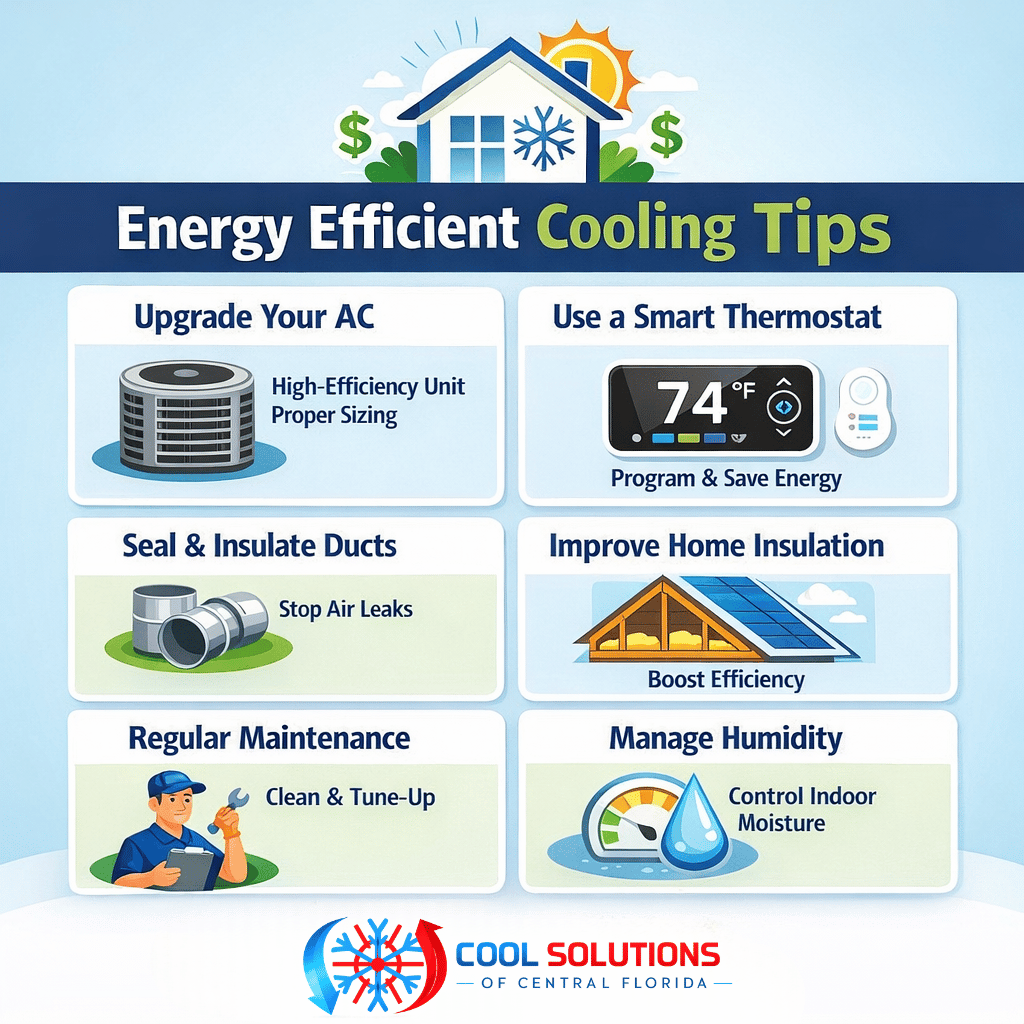
Energy Efficient Cooling

Energy Efficient Cooling in Central Florida: How to Keep Your Home Comfortable Without Wasting Money

When Florida heat and humidity settle in, your air conditioner does more than keep you comfortable. It protects your indoor air quality, helps control moisture, and makes everyday life at home feel manageable again. But if your system runs constantly, struggles to cool evenly, or sends your electric bill through the roof, it may be time to take a closer look at what energy efficient cooling really means.

Energy efficient cooling is not just about buying a new air conditioner and hoping for the best. It is about creating a system that cools your home effectively while using less energy to do it. That includes the equipment itself, the condition of your ductwork, your thermostat settings, insulation, airflow, humidity control, and the quality of the installation.

At Cool Solutions of Central Florida, we help homeowners make smarter cooling decisions based on how they actually live. Some homes need a high-efficiency AC replacement. Others can improve performance with routine maintenance, duct improvements, thermostat upgrades, or a better plan for airflow and indoor comfort. The goal is always the same: reliable cooling, lower operating costs, and a home that feels better every day.

What Is Energy Efficient Cooling?

Energy efficient cooling refers to any cooling strategy, system, or upgrade that reduces energy use without sacrificing comfort. In simple terms, it means your home stays cool with less waste. A truly efficient cooling setup should remove heat effectively, manage humidity, maintain even temperatures, and avoid unnecessary strain on the system.

Many homeowners assume energy efficiency starts and ends with a higher-rated unit. That matters, but it is only one piece of the puzzle. Even a great air conditioning system can underperform if it is oversized, undersized, poorly installed, connected to leaking ducts, or forced to work in a home with insulation and airflow issues. That is why a whole-home approach usually delivers the best long-term results.

Why Energy Efficient Cooling Matters in Florida

Central Florida homes demand a lot from their air conditioning systems. Long cooling seasons, high outdoor temperatures, and constant humidity create conditions where inefficiency becomes expensive fast. If your system is not operating as it should, you may notice longer run times, uneven room temperatures, excess indoor moisture, rising monthly utility costs, or a house that never seems to feel truly comfortable.

Efficient cooling matters because it helps solve all of those problems at once. A well-designed and properly maintained system can reduce wasted energy, improve indoor comfort, extend equipment life, and lower the risk of frequent breakdowns. It can also help your home feel cooler at the thermostat setting you already use because better humidity control makes the indoor environment more comfortable.

For many Florida homeowners, that combination is what makes the biggest difference. It is not just about using less electricity. It is about making your home feel better while spending less to get there.

Signs Your Home May Need More Energy Efficient Cooling

Not every inefficient system fails dramatically. Sometimes the warning signs are subtle at first. Maybe one room stays warmer than the others. Maybe your AC seems to run all afternoon. Maybe your power bill keeps creeping up each summer even though your habits have not changed.

Here are some common signs your current setup may not be as efficient as it should be:

  • High monthly cooling costs.
  • Hot and cold spots throughout the house.
  • Weak airflow from vents.
  • An air conditioner that runs constantly.
  • Indoor air that feels cool but still damp or sticky.
  • Frequent repairs or short cycling.
  • An aging system that no longer performs like it used to.
  • Noticeable dust buildup or air quality issues.

If you are dealing with one or more of these issues, the answer may not always be a full replacement. Sometimes a targeted improvement can restore performance and improve efficiency more than homeowners expect.

What Makes a Cooling System More Efficient?

Several factors influence whether a cooling system is truly energy efficient. The first is equipment design. Modern high-efficiency air conditioners and heat pumps are built to cool homes more effectively while using less electricity than older systems. Features like variable-speed technology, improved compressors, and better communication between system components can all help optimize performance.

The second factor is proper sizing. Bigger is not always better. An oversized system may cool the house too quickly without running long enough to remove humidity properly. That can leave the air feeling clammy and uncomfortable. An undersized system may struggle all day, increasing wear and energy use. The right size system is the one that matches the home.

Installation quality also matters more than most people realize. Even premium equipment can waste energy if refrigerant charge is off, airflow is unbalanced, duct connections leak, or the thermostat is not calibrated and placed correctly. Efficient cooling depends on how the system performs in the real world, not just what the label says on paper.

Energy Efficient Cooling Options for Homeowners

High-Efficiency Central Air Conditioning

A modern high-efficiency central air conditioner can be a strong option for homes with existing ductwork. Newer systems are designed to cool more effectively while reducing energy consumption, especially when paired with clean coils, proper airflow, sealed ducts, and a compatible thermostat. For homeowners replacing an aging unit, this can be one of the most impactful upgrades available.

Heat Pumps

Heat pumps are a popular energy efficient cooling option because they provide cooling and heating in one system. In Florida’s climate, they often make excellent sense. During the cooling season, they move heat out of your home efficiently, and during cooler periods, they can reverse operation to provide heat. For homeowners looking for year-round efficiency, a heat pump can be a practical and cost-effective solution.

Ductless Mini-Split Systems

Ductless mini-splits can be ideal for additions, garages, bonus rooms, home offices, and areas where ductwork is limited or inefficient. They allow for zoned cooling, which means you can control temperatures in specific areas without forcing the entire home to be conditioned the same way. That targeted control can reduce waste and improve comfort in spaces that are usually hard to manage.

Smart Thermostats and Controls

Sometimes energy efficient cooling starts with better control instead of bigger equipment. Smart thermostats help homeowners manage temperatures more intentionally based on their schedule and preferences. When used properly, they can reduce unnecessary runtime, improve consistency, and help maintain comfort without overcooling the home.

The Role of Humidity in Efficient Cooling

In Central Florida, humidity is a major part of the comfort equation. A house can technically reach the thermostat setting and still feel uncomfortable if moisture levels stay too high. That is why energy efficient cooling is about more than cold air. It is also about moisture removal.

When an AC system controls humidity well, many homeowners feel comfortable at a slightly higher thermostat setting. That can translate into energy savings without feeling like you are sacrificing comfort. On the other hand, poor humidity control often leads people to lower the thermostat more and more, which drives up energy use while never really fixing the underlying problem.

If your home feels sticky indoors, your system may be dealing with sizing issues, airflow problems, duct leakage, thermostat settings, or maintenance needs that affect how well it removes moisture from the air.

How Maintenance Improves Energy Efficiency

Routine HVAC maintenance is one of the simplest ways to support energy efficient cooling. A neglected system has to work harder to produce the same result. Dirty filters restrict airflow. Dirty coils reduce heat transfer. Worn components can strain the system and increase energy use. Small issues that seem minor now can become expensive performance problems later.

Regular maintenance helps keep your system operating closer to its intended performance level. It also allows a technician to catch early signs of wear before they turn into bigger repairs. For homeowners who want lower energy bills and fewer breakdowns during the hottest part of the year, maintenance is one of the smartest investments they can make.

Ductwork, Airflow, and Home Efficiency

One of the most overlooked parts of energy efficient cooling is the duct system. If cooled air is leaking into the attic, crawl space, or other unconditioned areas before it ever reaches your rooms, your system is wasting energy every time it turns on. Poor airflow can also make some areas of the home feel stuffy or uneven while the thermostat keeps calling for more cooling.

Leaky ducts, crushed runs, poor return airflow, and unbalanced distribution all affect efficiency. In many homes, solving these hidden issues can noticeably improve comfort even before a new unit is installed. That is why a true efficiency evaluation should not stop at the outdoor equipment. The full air delivery system matters.

How to Choose the Right Energy Efficient Cooling Solution

The right solution depends on your home, your goals, and your current system. Some homeowners want to lower monthly bills. Others are more focused on comfort, humidity control, or replacing an unreliable unit before it fails completely. The best approach usually starts with a professional evaluation that looks at how the system is performing, not just how old it is.

When comparing options, it helps to consider:

  • The age and condition of your current system.
  • How evenly your home cools.
  • Your current utility costs.
  • Whether your ductwork is in good shape.
  • The insulation and air sealing in your home.
  • Your interest in a heat pump, central AC, or ductless solution.
  • Your long-term plans for the property.

A good recommendation should be based on performance, efficiency, and comfort together. It should not feel like a one-size-fits-all sales pitch.

Why Proper Installation Matters So Much

Even the most efficient cooling equipment can disappoint if it is installed poorly. This is one of the biggest reasons homeowners end up frustrated after replacing an older system. They expect better comfort and lower bills, but the results never fully show up because the installation was rushed or incomplete.

Proper installation includes accurate load calculations, equipment matching, airflow setup, refrigerant charging, thermostat configuration, and careful inspection of duct performance. These details are not extras. They are the difference between a system that merely runs and one that actually performs efficiently in real conditions.

At Cool Solutions of Central Florida, we believe efficiency should show up in daily life. Your home should feel more balanced. Your system should not seem like it is fighting all day to keep up. And when the weather outside gets brutal, you should still be able to count on steady indoor comfort.

Benefits of Energy Efficient Cooling

  • Lower monthly utility bills.
  • Better indoor comfort throughout the home.
  • Improved humidity control.
  • Reduced strain on HVAC equipment.
  • Fewer unexpected breakdowns.
  • More consistent temperatures from room to room.
  • Potentially longer system lifespan.
  • A smarter long-term investment in your home.

Schedule an Energy Efficient Cooling Evaluation

If your current AC system is costing too much to run, struggling to keep up, or leaving parts of your home uncomfortable, it may be time to explore a better solution. Energy efficient cooling is not about chasing buzzwords. It is about building a system that fits your home, your lifestyle, and Florida’s climate in a way that makes practical sense.

Cool Solutions of Central Florida helps homeowners improve comfort, reduce waste, and make informed decisions about their cooling systems. Whether you need AC replacement, maintenance, a thermostat upgrade, airflow improvements, or expert guidance on the best way to cool your home more efficiently, our team is here to help.

Contact Cool Solutions of Central Florida today to schedule your evaluation and find out what smarter, more efficient cooling can look like in your home.


energy efficient tips

Frequently Asked Questions About Energy Efficient Cooling

What is the most energy efficient way to cool a home in Florida?

The most energy efficient approach depends on the home, but common solutions include a properly sized high-efficiency air conditioner or heat pump, sealed and balanced ductwork, smart thermostat control, strong airflow, and good humidity management. In many homes, efficiency improves most when the whole system is evaluated instead of focusing on just one component.

Does a higher-efficiency AC really save money?

It can, especially if your current system is older, inefficient, or struggling to perform. Savings depend on factors like equipment efficiency, installation quality, duct condition, thermostat habits, and how often your system runs during the cooling season.

Are ductless mini-splits energy efficient?

Yes, ductless mini-splits can be very efficient, especially in spaces where zoning matters or where ductwork is not practical. They are often a strong choice for additions, converted garages, bonus rooms, and targeted comfort needs.

Can maintenance really improve AC efficiency?

Absolutely. Routine maintenance can help your system run more smoothly by improving airflow, cleaning critical components, reducing strain, and catching issues early. A clean and properly serviced system generally performs better than one that has been ignored.

Why does my house still feel humid even when the AC is running?

That can happen when a system is oversized, poorly tuned, restricted by airflow problems, or dealing with duct leakage or maintenance issues. Efficient cooling in Florida should address both temperature and humidity for real indoor comfort.


How Much Does an Air Conditioner Cost for a 2,000 Sq Ft Home in Central Florida

How Much Does an Air Conditioner Cost for a 2,000 Sq Ft Home in Central Florida?

If you are wondering how much an air conditioner costs for a 2,000 square foot home in Central Florida, the honest answer is: it depends on the size of the system your home actually needs, the efficiency level you choose, the condition of your ductwork, and how complex the installation is.

For many homeowners in the Sanford, Deltona, Lake Mary, Oviedo, Winter Park, and Greater Orlando areas, a new air conditioning system for a 2,000 sq ft home often falls somewhere in the $8,500 to $13,000+ range for a professionally installed central AC or heat pump system. In some cases, the investment may be lower for a more standard installation, or higher if you choose premium efficiency equipment, need ductwork modifications, electrical upgrades, indoor air quality add-ons, or other comfort improvements.

At Cool Solutions of Central Florida, we believe homeowners deserve clear answers, honest recommendations, and a no-pressure experience. That is why we take the time to inspect your home, evaluate your current system, and explain your options in plain language so you can make the best decision for your comfort and your budget.

What Is the Average Cost of an AC for a 2,000 Sq Ft Home?

As a general starting point, many 2,000 sq ft homes in Florida may need a system in the 3.5-ton to 4-ton range, but square footage alone never tells the whole story. A home with poor insulation, older windows, high ceilings, sun exposure, leaky ductwork, or humidity issues may need a different solution than a newer, more energy-efficient home of the same size.

Here is a practical way to think about the price range:

  • Budget-friendly standard efficiency installation: Often starts around the upper $8,000s, depending on equipment and installation conditions.
  • Mid-range replacement with better efficiency and features: Commonly lands around $9,500 to $12,500.
  • Higher-efficiency or more complex installations: Can run $13,000 or more, especially when duct, electrical, drainage, or air quality upgrades are involved.

The best way to get a real number is to have your home evaluated by an experienced HVAC professional who can size the system correctly and identify anything that may affect installation cost.

Why Isn’t There One Set Price for Every 2,000 Sq Ft House?

This is one of the most common questions we hear, and it is a smart one. Two homes can both be 2,000 square feet and still need completely different recommendations.

That is because air conditioner replacement is not just about putting in a new outdoor unit. The right recommendation should account for:

  • Home layout and number of floors
  • Ceiling height
  • Insulation quality
  • Window condition and sun exposure
  • Ductwork size, leakage, and airflow performance
  • Humidity control needs
  • Energy efficiency goals
  • Brand and equipment tier
  • Thermostat compatibility
  • Permits, code requirements, and installation complexity

At Cool Solutions of Central Florida, we do not believe in throwing out random pricing without looking at the full picture. Our team evaluates what your home truly needs so you do not end up paying for the wrong system or dealing with comfort problems later.

What Factors Affect the Cost of a New AC System?

1. Proper System Size

One of the biggest pricing and performance factors is system size. If a unit is too small, it may run constantly and struggle to cool your home. If it is too large, it can short cycle, leave humidity behind, and wear out faster. Proper sizing helps protect your investment and improve long-term comfort.

2. Energy Efficiency Rating

Higher-efficiency systems usually cost more upfront, but they can reduce monthly energy use over time. In Central Florida, where air conditioners work hard for much of the year, choosing the right efficiency level matters.

3. Ductwork Condition

If your ductwork is leaking, undersized, poorly laid out, or damaged, simply installing a new AC may not solve the comfort issue. In some homes, duct modifications or repairs are necessary to help the new system perform the way it should.

4. Installation Complexity

Some homes are straightforward. Others require attic work, electrical updates, drain line corrections, line-set changes, or other adjustments that affect labor and total project cost.

5. Indoor Air Quality and Comfort Upgrades

Some homeowners choose to add smart thermostats, UV lighting, air purification systems, insulation improvements, or extended warranty protection. These upgrades can increase the total price, but they may also improve comfort, air quality, and peace of mind.

What Size Air Conditioner Does a 2,000 Sq Ft Home Usually Need?

Many homeowners search this question because they want a quick answer before getting quotes. While a 2,000 square foot home in Florida often lands in the 3.5-ton to 4-ton range, that should never be treated as a guaranteed answer.

The only responsible way to recommend a system is to look at the home itself. At Cool Solutions of Central Florida, we focus on correct sizing, airflow, and overall system performance because that is what helps homeowners avoid:

  • Hot and cold spots
  • High electric bills
  • Poor humidity removal
  • Frequent repairs
  • Short cycling
  • Premature system wear

Our goal is not to sell the biggest unit. Our goal is to recommend the right unit for your home.

Is It Better to Repair or Replace an Older Air Conditioner?

If your current AC is over 10 to 15 years old, needs frequent repairs, struggles to keep up, or causes your energy bills to climb, replacement may make better long-term financial sense than continuing to patch the old system.

Here are some common signs replacement may be the smarter move:

  • Your AC needs multiple repairs in a short period of time
  • Your home never seems evenly cool
  • Your indoor humidity feels high
  • Your electric bills are rising
  • Your system uses older components or outdated refrigerant-related equipment
  • Your current system is simply worn out from Florida heat and long run times

At Cool Solutions of Central Florida, we take a customer-first approach. We will inspect your system, explain what we find, and help you compare your options without pressure. Sometimes a repair still makes sense. Sometimes replacement is the better value. Either way, you deserve honest guidance.

Why Homeowners Choose Cool Solutions of Central Florida

Choosing an HVAC company is about more than price alone. Installation quality, communication, and follow-through matter. A poorly installed air conditioner can cost you more in energy waste, comfort issues, and future repairs.

Homeowners turn to Cool Solutions of Central Florida because we focus on doing the job right and treating people fairly. Our company was built on trust, transparency, and clear communication. We understand that replacing an air conditioner is a major investment, and we work hard to make the process simple, informative, and stress-free.

  • Licensed Florida HVAC contractor
  • Serving homeowners and businesses since 2007
  • Nearly two decades of hands-on HVAC experience
  • Customer-first, no-pressure recommendations
  • Upfront communication and honest pricing
  • Proper sizing and performance-focused installation
  • Financing options available
  • Friendly, professional service throughout Central Florida

Do New Air Conditioners Save Money on Utility Bills?

In many cases, yes. A properly sized, professionally installed new system can cool more effectively and operate more efficiently than an older unit that is struggling to keep up. That does not mean every homeowner will see the exact same savings, but improved efficiency, better airflow, and more modern technology can all help reduce wasted energy.

Just as important, a new system can also improve:

  • Comfort consistency from room to room
  • Humidity control
  • System reliability
  • Noise levels
  • Peace of mind during the hottest months of the year

Frequently Asked Questions About AC Cost for a 2,000 Sq Ft Home

How much does a new AC unit cost for a 2,000 sq ft home in Florida?

For many Florida homeowners, the installed cost often falls around $8,500 to $13,000+, depending on system size, efficiency, ductwork, labor, and any additional upgrades. A more exact quote requires a home-specific evaluation.

Does square footage alone determine the price?

No. Square footage is only one factor. The layout of the home, insulation, windows, ductwork, sun exposure, and humidity demands all affect the right system and the final cost.

Will I need a 3-ton, 3.5-ton, or 4-ton system?

Many 2,000 sq ft homes in Central Florida may need a 3.5-ton to 4-ton system, but proper sizing should always be based on a full evaluation, not guesswork.

Do higher-efficiency systems cost more?

Yes. Higher-efficiency systems generally have a higher upfront cost, but they may help reduce monthly cooling costs over time.

Can bad ductwork increase the cost of replacement?

Yes. If your ducts are leaking, undersized, damaged, or poorly designed, repairs or modifications may be needed to help your new system perform properly.

Do you offer financing for a new AC system?

Yes. Cool Solutions of Central Florida offers financing options to help make a new HVAC system more manageable for homeowners.

Get a Real Answer for Your Home

If you are researching the cost of an air conditioner for a 2,000 sq ft home, the best next step is to get a professional evaluation from a team that values honesty and customer care. At Cool Solutions of Central Florida, we will assess your home, explain your options clearly, and provide a recommendation based on what makes sense for your comfort and budget.

Call Cool Solutions of Central Florida today at (407) 416-8148 to schedule your quote and get expert guidance on replacing your air conditioner in Sanford, Deltona, Orlando, Lake Mary, Oviedo, Winter Park, and surrounding Central Florida areas.

Emergency AC Repair Orlando

Emergency AC Repair Orlando – 24 Hour Air Conditioning Service

Living in Orlando means dealing with intense heat and humidity for most of the year. When your air conditioner suddenly stops working, it is more than just uncomfortable. A broken cooling system can quickly make your home unbearable during the Florida heat.

Cool Solutions of Central Florida provides fast and dependable emergency AC repair in Orlando when homeowners need help the most. Our experienced technicians respond quickly to diagnose issues and restore comfort so your home stays cool and safe.

Whether your system stops working late at night, over the weekend, or during the hottest day of summer, our team is ready to provide reliable 24 hour AC repair in Orlando.

Why Homeowners Choose Our Orlando AC Repair Service

When your cooling system fails, you need a company that can respond quickly and fix the issue correctly the first time. Cool Solutions of Central Florida has built a reputation as one of the best HVAC companies Orlando homeowners trust.

Our team provides fast emergency air conditioner repair in Orlando along with honest diagnostics and dependable solutions. We service all major HVAC brands and work hard to deliver long lasting repairs that restore comfort quickly.

  • Fast response for emergency AC repair Orlando homeowners depend on
  • Experienced technicians trained on all major HVAC systems
  • Reliable solutions that fix the problem properly
  • Professional service and clear communication
  • Full service heating and cooling support

Common Air Conditioning Emergencies We Repair

Air conditioning systems in Central Florida run nearly year round, which can lead to sudden failures when components wear out or systems become overworked.

Our technicians regularly respond to emergency calls for problems such as:

  • AC blowing warm air
  • Air conditioner not turning on
  • Frozen evaporator coils
  • Refrigerant leaks
  • Electrical or capacitor failures
  • Clogged condensate drain lines
  • Thermostat malfunctions
  • Loud or unusual noises coming from the unit

If your system stops cooling your home, our team can quickly diagnose the issue and provide professional Orlando AC repair service.

24 Hour AC Repair Orlando Residents Can Depend On

Cooling emergencies can happen at any time. That is why our technicians are available to provide 24 hour AC repair in Orlando when homeowners experience unexpected breakdowns.

Our technicians arrive prepared with the tools and equipment needed to identify the problem and restore cooling quickly. Many issues can be repaired during the same visit.

When you call Cool Solutions of Central Florida for emergency AC repair Orlando homeowners can expect fast service, accurate diagnostics, and dependable repair solutions.


Complete HVAC Services in Orlando

In addition to emergency repairs, our company offers a full range of heating and cooling services to keep your system operating efficiently throughout the year.

AC Repair Orlando

If your cooling system is struggling to maintain temperature, making unusual noises, or running constantly, our technicians provide reliable AC Orlando repair services to restore system performance.

Heat Pump Repair Orlando

Many Florida homes rely on heat pump systems for both heating and cooling. Our technicians provide dependable heat pump repair Orlando homeowners trust when their systems stop working properly.

Furnace Repair Orlando FL

Although winters are mild, many homes still use heating systems during colder weather. Our technicians also provide furnace repair Orlando FL services when heating equipment needs attention.

AC Installation Orlando

If your system is older or cannot be repaired, our team offers professional AC installation Orlando homeowners rely on for energy efficient cooling systems.

New AC System Orlando

Installing a new AC system Orlando homeowners can rely on improves energy efficiency, indoor comfort, and long term system reliability.

Ductless Air Conditioning Orlando

Ductless air conditioning Orlando systems are ideal for homes without ductwork or for room additions where traditional systems may not be practical.

Prevent Emergency Repairs With AC Maintenance

Many emergency AC failures occur because systems are not regularly serviced. Routine maintenance helps identify small issues before they become expensive breakdowns.

Our AC tune up Orlando FL service includes inspection, cleaning, and testing of system components to ensure everything operates efficiently.

Preventative maintenance can extend the life of your HVAC system, improve energy efficiency, and reduce the chances of sudden failures during Orlando’s hottest months.

Signs You May Need Emergency AC Repair

Some HVAC issues require immediate attention. If you notice any of the following signs, it may be time to contact an HVAC technician right away.

  • Your air conditioner stops working completely
  • Your home becomes excessively hot
  • Burning or electrical smells from the unit
  • Water leaking around the system
  • Loud grinding or banging sounds
  • The system repeatedly trips the circuit breaker

If you are unsure whether your situation requires emergency service, our technicians can evaluate the problem and help determine the best solution.

emergency ac repair orlando

Orlando Air Conditioning Experts

Cool Solutions of Central Florida provides professional heating and cooling services throughout the Orlando area. Our technicians are experienced in diagnosing complex HVAC issues and delivering solutions that restore comfort quickly.

As trusted Orlando air conditioning experts, we focus on dependable repairs, honest service, and long lasting results for homeowners across Central Florida.

Call for Emergency AC Repair Orlando Homeowners Trust

If your air conditioner suddenly stops working, do not wait for the problem to get worse. Contact Cool Solutions of Central Florida for fast and dependable emergency AC repair in Orlando.

Our experienced technicians are ready to diagnose the issue and restore cooling so your home stays comfortable.

Emergency AC Repair Orlando FAQ

What qualifies as an AC emergency?

An AC emergency typically occurs when your system stops working during extreme heat, produces burning smells, leaks water excessively, or makes loud mechanical noises. In Orlando’s hot climate, a broken air conditioner can quickly make a home uncomfortable or unsafe.

Do you offer 24 hour AC repair in Orlando?

Yes. Cool Solutions of Central Florida offers 24 hour AC repair in Orlando so homeowners can get fast help when their cooling system fails unexpectedly.

How quickly can a technician arrive for emergency AC repair?

Response times vary depending on location and service demand, but our technicians work to respond quickly and often diagnose and repair the problem during the same visit.

What are the most common reasons an air conditioner stops working?

Common causes include refrigerant leaks, capacitor failure, clogged drain lines, thermostat issues, frozen coils, and electrical problems within the HVAC system.

Can you repair all brands of air conditioning systems?

Yes. Our technicians are trained to service and repair most major air conditioning brands including central air systems, heat pumps, and ductless air conditioning units.

Should I turn off my AC if it stops cooling?

If your air conditioner stops cooling or begins making unusual noises, turning the system off can help prevent further damage while waiting for a technician.

Do emergency AC repairs cost more?

Emergency HVAC services may involve additional service fees depending on the time and urgency of the repair, but addressing the problem quickly can prevent more expensive system damage.

How can I prevent emergency AC repairs?

Routine HVAC maintenance and regular AC tune ups help identify worn components, airflow problems, and refrigerant issues before they lead to unexpected system breakdowns.

Why Is My AC Unit Leaking Water

Why Is My AC Unit Leaking Water? Causes & Fixes in Deltona, FL

If you’re asking, “why is my AC unit leaking water?” you’re not alone. This is one of the most common air conditioning problems homeowners in Deltona, Florida experience — especially during our hot and humid months. While your air conditioner naturally produces condensation as it cools your home, water pooling inside, dripping from the ceiling, or leaking around the unit is not normal and should be addressed quickly.

An AC water leak can lead to mold growth, drywall damage, ruined flooring, and even system failure if ignored. Below we’ll explain the most common reasons your AC is leaking water, what you can check yourself, and when to call a licensed HVAC professional.

How Your Air Conditioner Creates and Drains Water

Your air conditioner removes heat and humidity from indoor air. When warm air passes over the cold evaporator coils, moisture forms and drips into a drain pan. That water then flows through a condensate drain line and exits your home safely. If any part of this drainage system becomes blocked, damaged, or overwhelmed, water can back up and leak inside. According to Carrier.

7 Common Reasons Your AC Unit Is Leaking Water

1. Clogged Condensate Drain Line

This is the number one cause of AC leaks. Dirt, dust, algae, and debris can clog the condensate drain line over time. When that happens, water backs up into the drain pan and eventually spills over.

Signs: Water pooling near the indoor air handler, musty smell, visible drain line blockage.

2. Rusted or Cracked Drain Pan

Older AC systems may develop a rusted or damaged drain pan. If the pan cracks or corrodes, water will leak through instead of draining properly.

Signs: Visible rust, corrosion, or dripping directly from beneath the unit.

3. Dirty Air Filter Restricting Airflow

A clogged air filter reduces airflow over the evaporator coils. This can cause the coils to freeze. When the ice melts, excess water overwhelms the drain system and causes leaks.

Signs: Weak airflow, ice on refrigerant lines, increased humidity indoors.

4. Frozen Evaporator Coils

Frozen coils can result from dirty filters, blocked vents, low refrigerant, or airflow issues. When the system shuts off and the ice melts, water can overflow the pan.

5. Low Refrigerant Levels

Low refrigerant reduces pressure in the system, causing the evaporator coil to get too cold and freeze. When thawing occurs, excessive water can spill out.

Signs: Hissing sounds, poor cooling performance, ice buildup.

6. Faulty Condensate Pump

Some homes in Deltona use a condensate pump to move water out of the system. If the pump fails, water has nowhere to go and leaks around the unit.

7. Improper Installation or Unlevel Unit

If your air handler isn’t level or the drain line was installed incorrectly, gravity won’t properly move condensation away from the system.

Is It Normal for an AC to Drip Water?

It is completely normal for your outdoor AC unit to drip water during humid Florida weather. That means your system is removing moisture from the air. However, water leaking inside your home, pooling near walls, or dripping from ceilings is never normal.

What Happens If You Ignore a Leaking AC?

Ignoring an AC water leak can lead to water damage, mold growth, higher energy bills, electrical hazards, and costly repairs. Catching the problem early often prevents major damage.

What Should You Do If Your AC Is Leaking Water?

First, turn off the system to prevent further damage. Check your air filter and replace it if dirty. Inspect for visible clogs in the drain line. If the leak continues or you notice ice buildup, it’s time to call a professional.

Cool Solutions of Central Florida proudly serves Deltona and surrounding areas.

If your AC unit is leaking water, call (386) 789-4408 for fast diagnosis and repair.

Frequently Asked Questions About AC Leaks

1. Why is my AC leaking water inside my house?

The most common causes are a clogged condensate drain line, frozen evaporator coils, or a damaged drain pan.

2. Can I run my AC if it’s leaking?

No. Running a leaking AC can cause additional water damage and may worsen the underlying issue.

3. How much does it cost to fix a leaking AC?

Costs vary depending on the issue. A simple drain line cleaning is inexpensive, while refrigerant repairs or pump replacement cost more.

4. Can a clogged air filter cause water leaks?

Yes. Restricted airflow can freeze coils, which leads to excess water when thawing occurs.

5. Is AC leaking water an emergency?

If water is near electrical components or causing ceiling damage, it should be addressed immediately.

6. How do I know if my condensate line is clogged?

Standing water near the indoor unit or a musty smell are common indicators.

7. Why does my AC leak more during humid weather?

High humidity increases condensation production, which can expose drainage problems.

8. How can I prevent my AC from leaking water?

Regular maintenance, replacing filters, and annual inspections help prevent most AC water leaks.

New Hvac System Cost

New HVAC System Cost in Central Florida: What You’ll Pay, What Impacts Price, and How to Budget Smart

If you’re Googling “new HVAC system cost,” you’re probably in that uncomfortable in-between: your current system is limping along, your electric bill is creeping up, and you don’t want to overpay (or underbuy) on something your home depends on every day in Florida. The truth is, there isn’t one “right” price for a new HVAC system—because the final number is a combination of equipment, sizing, efficiency, ductwork condition, labor complexity, and even how your home moves air. This guide breaks it down in plain English so you can compare quotes confidently and understand what you’re actually buying.

Quick Answer: What Is the Average Cost of a New HVAC System?

National averages typically land in a broad range, and most homeowners see real-world quotes that depend on system type and installation needs. Many reputable national cost guides place complete system replacement ranges roughly between $5,000 and $12,500 for common replacements, with higher totals when you add ductwork changes, upgrades, or higher-efficiency equipment. Larger homes, complicated installs, and premium efficiency can push the total higher, sometimes into the upper teens or beyond.

In Central Florida, pricing often reflects year-round demand, strict performance expectations (humidity control matters here), and the fact that the “right” system isn’t just about cooling—it’s about steady comfort, proper airflow, and smart moisture removal. If your contractor is quoting a price that seems wildly low compared to other estimates, it’s worth asking what’s missing (permits, float switch, pad, electrical whip, duct transitions, thermostat, returns, or even proper commissioning).

New HVAC System Cost Breakdown: Where the Money Actually Goes

Most quotes combine three buckets: equipment, labor/installation, and “job-specific” extras. Here’s how to think about each.

1) Equipment (Outdoor + Indoor Components)

Your equipment package usually includes an outdoor condenser/heat pump, an indoor air handler (or furnace in other regions), and sometimes a matched coil. Brand and model tier matter, but the biggest cost driver is capacity (tonnage/BTUs) and efficiency (SEER2 and related ratings). Higher efficiency typically costs more upfront, but can reduce operating costs over time—especially when the system is properly sized and installed.

2) Installation Labor

Labor is not just “swap the boxes.” A quality install includes safe removal, correct refrigerant line practices, proper drainage, electrical connections, airflow setup, and startup testing. In Florida, it should also include condensate protection (like a float switch) and a drain configuration that prevents water damage. The more complicated the install (tight attic access, platform rebuild, line-set reroute, electrical updates), the more labor increases.

3) Ductwork, Airflow, and Comfort Fixes

This is the part many homeowners don’t expect. You can buy excellent equipment, but if your ductwork is undersized, leaky, poorly insulated, or your returns are inadequate, comfort and efficiency suffer. Duct repairs, transitions, adding returns, sealing, or replacing duct runs can add to the total—sometimes significantly—but it’s also one of the most common reasons a “new system” still doesn’t feel right.

4) Permits, Code Requirements, and Safety Add-Ons

Permits and code compliance can affect cost and are worth it for safety, resale, and peace of mind. Depending on the job, you may also need electrical work, a new disconnect, surge protection, a new pad/stand, or hurricane strapping considerations. If a quote is missing these, you may see change orders later.

Biggest Factors That Change Your New HVAC System Cost

When two homes seem similar but get very different quotes, it usually comes down to these variables.

System Type: AC + Air Handler vs. Heat Pump

In Central Florida, many homes use heat pumps because they handle both heating and cooling efficiently for our mild winters. A straight AC system only cools and pairs with electric heat strips for heating if needed. The right choice depends on your comfort preferences, existing setup, and budget goals.

Home Size and Required Capacity (Tonnage)

Bigger homes usually need more capacity, but bigger isn’t always better. Oversizing can lead to short cycling, weaker dehumidification, and uneven temperatures. Proper sizing is based on a load calculation (often called Manual J), not guesswork. If you’re getting quotes without anyone measuring, evaluating insulation/windows, or asking about comfort issues, that’s a red flag.

Efficiency Ratings (SEER2 and More)

SEER2 is the updated efficiency standard you’ll see on modern equipment. Higher SEER2 systems typically cost more upfront. The “best value” is often the efficiency level that balances purchase price with realistic savings—especially if you plan to stay in the home for several years.

Ductwork Condition and Design

Ductwork is the delivery system. Leaks, crushed flex duct, long runs, poor return placement, and undersized trunks all add static pressure and reduce performance. Fixing duct problems can raise the install price, but it often improves comfort more than buying a fancier outdoor unit.

Installation Difficulty (Attic Access, Platform, Drain, Electrical)

Florida installs frequently involve attic air handlers, which means tight access and careful condensate setup. If your existing platform is unsafe or deteriorated, it may need rebuilding. If electrical is undersized or outdated, updates may be required for safe operation.

Thermostat, Zoning, IAQ Upgrades

Optional add-ons like smart thermostats, zoning, UV lights, upgraded filtration, or whole-home dehumidification can increase cost. Some upgrades are worthwhile—especially filtration and humidity control—but they should be recommended based on your home and goals, not automatically added.

What a “Good” HVAC Quote Should Include (So You Can Compare Apples to Apples)

Quotes can look similar but include very different scopes. When you’re comparing estimates, make sure each one clearly lists:

  • Exact equipment model numbers (outdoor unit + indoor unit + coil)
  • Capacity (tons/BTUs) and efficiency ratings (SEER2 and related metrics)
  • Scope of ductwork work (if any): repair, seal, replace, add returns, transitions
  • Electrical scope: disconnect, whip, breaker, surge protection (if included)
  • Condensate safety items (float switch) and drain modifications
  • Permits and inspection (included or not)
  • Warranty details (manufacturer + labor/workmanship)
  • Startup/commissioning steps (airflow and refrigerant charging verified)

If a quote is vague, you’re not really comparing price—you’re comparing guesses.

Ways Homeowners Save Money Without Cutting Corners

Saving money on a new HVAC system doesn’t have to mean buying the cheapest equipment. The better approach is to invest where it matters and avoid paying for things you won’t benefit from.

Choose the Right Efficiency Tier for Your Plans

If you plan to move soon, ultra-high efficiency may not pay back. If you plan to stay long-term, a higher efficiency system paired with proper airflow can make sense.

Fix Airflow Issues During Replacement

If you already have comfort problems (hot rooms, weak airflow, high humidity), replacement is the best time to correct duct issues. Doing it later usually costs more and is harder to schedule.

Ask About Rebates and Incentives

Depending on the equipment and programs available, rebates or tax credits may reduce your net cost. These programs change over time and have eligibility rules, so confirm current details before you buy.

Get Multiple Quotes—But Compare the Scope, Not Just the Bottom Line

Two quotes can differ by thousands because one includes permit, code items, commissioning, and duct improvements while the other does not. The cheapest quote is often missing something important.

Why Installation Quality Matters More Than Most People Realize

In Florida, a “new system” that’s installed poorly can still feel muggy, run constantly, and drive high energy bills. Proper refrigerant charging, airflow setup, drain configuration, and correct sizing are what turn a brand-new HVAC system into real comfort. If you want your investment to last, prioritize the contractor’s process—not just the logo on the unit.

Get a New HVAC System Cost Estimate in Sanford and Central Florida

At Cool Solutions of Central Florida, we help homeowners understand their options clearly—without pressure and without confusing jargon. If you want a real estimate based on your home (not just a national average), we’ll evaluate sizing, airflow, and installation requirements and then walk you through straightforward choices that match your comfort goals and budget.

Call Cool Solutions of Central Florida at (386) 789-4408 or request an estimate through our website. We serve Sanford and surrounding Central Florida communities.

High-Authority References You Can Use for Cross-Checking Costs

If you’d like to compare what you’re hearing locally with national data, these resources can help you sanity-check typical ranges and cost factors: Forbes Home HVAC Cost Guide, BobVila HVAC Replacement Cost, HomeAdvisor HVAC Cost (True Cost Guide), This Old House HVAC Replacement Cost Calculator, Trane Pricing Guide, and Bryant HVAC Pricing Guide.

FAQs: New HVAC System Cost

How much does a new HVAC system cost for a typical home?

For many homeowners, complete replacement commonly falls somewhere in the mid-thousands to low teens depending on system type, home size, and installation complexity. Ductwork repairs, electrical updates, and higher-efficiency equipment can raise the total.

Why do HVAC quotes vary so much for the same size house?

Because the house size alone doesn’t determine system load, duct condition, or installation difficulty. Two identical square-footage homes can have different insulation, window exposure, airflow issues, and equipment needs—plus different scopes of work included in the quote.

Does higher SEER2 always mean lower bills?

Higher efficiency can reduce operating costs, but only if the system is properly sized and installed with correct airflow. A high-SEER2 unit installed on poor ductwork or incorrect sizing may not deliver the savings you expect.

Will I need new ductwork with a new HVAC system?

Not always. If ductwork is in good shape and properly sized, you may only need sealing or minor repairs. But if ducts are leaking, undersized, or poorly designed, improvements can be one of the best investments you make during replacement.

How can I tell if my system is oversized or undersized?

Common signs include short cycling (turning on and off frequently), uneven temperatures, high humidity, weak airflow, and rooms that never feel comfortable. The best confirmation is a proper load calculation and airflow evaluation.

Are permits required for HVAC replacement in Florida?

Often, yes—especially for full replacements. Permits help ensure the work meets code and is inspected properly. Your contractor should be transparent about whether permits are included in your quote.

How do I get the most accurate new HVAC system cost estimate?

The most accurate estimate comes from a home-specific evaluation that considers load calculations, ductwork condition, electrical requirements, drainage configuration, and your comfort goals—not a quick “swap” quote.

AC Making Hissing Noise

AC Making a Hissing Noise? What It Means (And What to Do Next)

Hearing your AC making a hissing noise can be unsettling—especially if it’s new, getting louder, or happening every time the system runs. Sometimes a hiss is harmless. Other times it’s a sign of a problem that needs attention quickly, like a refrigerant leak or high pressure issue.

The good news is you don’t have to guess. Below we’ll explain the most common reasons an air conditioner hisses, what you can safely check yourself, what’s considered an emergency, and when it’s time to call a professional in Central Florida.

Is a Hissing Noise From an AC Dangerous?

It depends on what’s causing it. A light hiss that lasts a second during startup may be normal. But a persistent hiss—especially near the indoor unit, outdoor unit, or refrigerant line—can be a warning sign.

If you notice any of the following along with the hissing sound, it’s best to turn the system off and schedule service:

  • AC is blowing warm air
  • Ice on refrigerant lines or the indoor coil
  • Weak airflow from vents
  • Higher-than-normal humidity indoors
  • Sudden spike in your electric bill
  • Hissing sound is constant or getting worse

Common Causes of a Hissing AC Noise

Here are the most common reasons we see in the field when a homeowner reports a hissing sound:

1) Refrigerant Leak (Most Common Concern)

If the hiss sounds like air escaping or a tire losing air, one of the first things we look for is a refrigerant leak. Refrigerant doesn’t get “used up”—so if it’s low, it usually means it’s leaking somewhere.

Leaks can happen at:

  • Refrigerant line joints or fittings
  • Evaporator coil (indoor coil)
  • Outdoor coil (condenser coil)
  • Service valves

Why it matters: Low refrigerant can lead to poor cooling, frozen coils, compressor damage, and reduced system life. If the hiss is consistent and cooling is weak, don’t ignore it.

2) High Pressure or a Metering Device Issue

Air conditioners rely on refrigerant pressure to operate correctly. If the system is running at abnormal pressures or there’s an issue with the expansion valve or metering device, you may hear a hissing sound as refrigerant moves through the system.

Sometimes this is accompanied by performance problems like short cycling, uneven cooling, or reduced comfort.

3) Normal Refrigerant Movement (Short, Occasional Hiss)

In some cases, a brief hiss can simply be the sound of refrigerant equalizing pressure after the system shuts off or starts up—especially in newer systems.

The key difference is consistency. A “normal” hiss is usually:

  • Brief (a few seconds)
  • Not getting louder over time
  • Not paired with cooling problems

4) Ductwork Air Leak or Return Air Whistle

Not all hissing noises come from refrigerant. Sometimes the noise is actually airflow escaping through duct gaps, loose connections, or undersized returns. This can sound like a hiss or whistle and is often louder when the blower ramps up.

If the hiss seems to come from a wall, ceiling, or vent area, the cause may be duct-related rather than the AC unit itself.

5) Condensate Drain or Water-Related Issues

Occasionally, a clogged drain line or drainage issue can cause unusual noises around the air handler. While this isn’t the most common cause of “hissing,” it’s something we check—especially if there’s water around the unit or a float switch issue.

What You Can Check Safely (Before Calling a Pro)

If your AC is hissing, here are a few safe things you can do without touching electrical components or refrigerant lines:

  • Check the air filter: A clogged filter can create airflow strain and odd noises.
  • Listen for location: Does the sound come from the indoor unit, outdoor unit, or vents?
  • Look for ice: If you see ice on the refrigerant line or indoor coil, shut the system off.
  • Check cooling performance: If it’s blowing warm air or can’t keep up, it’s time to schedule service.

What not to do: Do not try to “top off” refrigerant. Refrigerant handling requires certification, and adding refrigerant without fixing the leak only creates a bigger problem later.

When You Should Turn the AC Off Immediately

Turn the system off and call for service if:

  • The hissing is loud and continuous
  • You see ice on the refrigerant line or unit
  • The AC is blowing warm air
  • Comfort and humidity are noticeably worse
  • You smell something unusual (chemical smell or burning)

Running the system while it’s struggling can lead to compressor damage, and that’s one of the most expensive repairs an HVAC system can face.

How We Diagnose a Hissing AC in Central Florida

When you call Cool Solutions of Central Florida for an AC noise issue, we don’t guess. We confirm what’s happening and why.

Our diagnosis typically includes:

  • Identifying the source of the sound (indoor unit, outdoor unit, ductwork, or lines)
  • Checking refrigerant pressures and temperature readings
  • Inspecting coils, fittings, valves, and line connections
  • Evaluating airflow and duct-related issues when applicable
  • Providing clear repair options with upfront pricing

By the end of the visit, you’ll know exactly what caused the noise and what it takes to fix it properly.

Frequently Asked Questions About an AC Making a Hissing Noise

Why is my AC making a hissing noise?
A hissing noise can come from refrigerant moving through the system, a refrigerant leak, abnormal pressure, or airflow leaking through ductwork. If the hiss is constant or paired with poor cooling, it should be inspected.
Is a hissing AC a sign of a refrigerant leak?
It can be. A steady hiss that sounds like air escaping is one of the common signs of a refrigerant leak, especially if your home isn’t cooling well or you see ice forming on the line or coil.
Should I turn off my AC if it’s hissing?
If the noise is loud, continuous, or you notice warm air, icing, or reduced airflow, yes—turn it off and schedule service. Continuing to run a struggling system can cause bigger damage.
Can ductwork cause a hissing noise?
Yes. Air leaks, loose duct connections, or return air restrictions can create a hiss or whistle sound, especially when airflow is high. If the noise seems to come from vents or walls, ductwork is worth checking.
Is it normal for a new AC to hiss?
Sometimes. Some systems make a brief hiss during startup or shutdown as pressures equalize. It’s usually not a concern if cooling performance is normal and the sound is short and consistent—not growing louder over time.
How do you find the source of the hissing sound?
We locate where the sound is coming from first, then check refrigerant pressures, inspect fittings and coils, and evaluate airflow. This helps confirm whether the issue is refrigerant-related, component-related, or duct-related.
Can I fix a refrigerant leak myself?
Refrigerant handling requires certification, and leaks must be properly repaired before adding refrigerant. The right fix is to locate the leak, repair it correctly, and then recharge the system to factory specifications.

Need Help With an AC Making a Hissing Noise?

If your AC is making a hissing sound and you’re not sure what it means, we can help you get answers quickly. Whether it’s a refrigerant leak, airflow issue, or something simple, we’ll diagnose it clearly and recommend the best fix.

Call Cool Solutions of Central Florida at (407) 416-8148 or contact us online to schedule service.

AC Blowing Hot Air

Why Is My AC Blowing Hot Air? (Florida Homeowner Guide)

If your AC is blowing hot air in the middle of a Florida summer, it’s more than uncomfortable — it can quickly become an emergency.

Before you panic, there are several common reasons this happens. Some are simple fixes. Others require professional AC repair.

Below, we’ll walk you through the most common causes, what you can check yourself, when to call an HVAC technician, and how to prevent it from happening again.

Quick Answer: Why Is My Air Conditioner Blowing Hot Air?

Your AC is likely blowing warm air because of one of these issues:

  • Thermostat set incorrectly
  • Dirty air filter restricting airflow
  • Low refrigerant or a refrigerant leak
  • Frozen evaporator coil
  • Tripped breaker to the outdoor unit
  • Compressor or capacitor failure
  • Clogged condensate drain line

1) Thermostat Settings Are Incorrect

This is the most common and easiest fix.

Check:

  • Is it set to COOL and not HEAT?
  • Is the temperature set lower than room temperature?
  • Is the fan set to AUTO (not ON)?

If the fan is set to ON, it may blow air even when the AC isn’t actively cooling, making it feel like warm air is coming out.

Florida Tip: Power outages and storms often reset thermostats.

2) Your Air Filter Is Dirty

A clogged air filter restricts airflow, which can cause warm air from vents, frozen coils, constant runtime, and higher electric bills.

If your filter looks gray or dusty, replace it immediately. In Florida’s humidity, filters often need to be replaced every 30–60 days.

3) Low Refrigerant or a Refrigerant Leak

Refrigerant is what absorbs heat from inside your home. If levels are low, air may feel slightly cool at first and then warm, ice may form on the indoor unit, and the system may run longer than normal.

Important: Low refrigerant typically indicates a leak and requires professional repair.

4) Frozen Evaporator Coil

If your AC is blowing hot air and you notice ice buildup, your evaporator coil may be frozen.

Common causes include:

  • Dirty filter
  • Blocked return vents
  • Low refrigerant
  • Restricted airflow

Turn off the AC and switch the fan to ON to help thaw it. If the problem returns, schedule a professional inspection.

5) Outdoor Unit Not Running

If your indoor unit is running but the outside condenser isn’t, your system may blow warm air.

Check:

  • Is the breaker tripped?
  • Is the disconnect switch off?
  • Is debris blocking the unit?

Storm season note: Power fluctuations can cause breaker trips. If the breaker keeps tripping, don’t reset it repeatedly — call a technician.

6) Compressor or Capacitor Failure

The compressor is the heart of your AC system. If it fails, air can still blow but won’t cool.

Possible signs:

  • Outdoor unit hums but won’t start
  • Clicking noises
  • Warm air from vents despite the system running

This requires professional diagnosis.

7) Clogged Condensate Drain Line

In Florida’s humidity, drain lines clog frequently. When clogged, safety switches may shut down the system, warm air may blow, and you may see water near the unit.

This is one of the most common service calls in our area.

What Should You Check First?

Before calling for AC repair, try this checklist:

  • Confirm thermostat settings
  • Replace the dirty air filter
  • Check the breaker panel
  • Inspect the outdoor unit for debris
  • Make sure vents are open and unblocked

If the issue continues, it’s time to call a licensed HVAC professional.

Why This Happens More Often in Florida

Florida homes experience high humidity, long AC run times, frequent storms and power fluctuations, and (in coastal areas) salt air corrosion. These factors put more strain on HVAC systems than in cooler climates.

Routine maintenance is critical here.

When to Call for AC Repair

Call immediately if:

  • Your AC is blowing hot air continuously
  • You see ice buildup
  • You hear unusual noises
  • Breakers repeatedly trip
  • Your home won’t cool below 78–80°F

Ignoring the issue can lead to compressor failure — one of the most expensive repairs.

How to Prevent Your AC From Blowing Hot Air Again

  • Replace filters regularly
  • Schedule annual AC maintenance
  • Keep the outdoor unit clear of debris
  • Have refrigerant levels checked
  • Clean drain lines seasonally

AC Blowing Warm Air? We Can Help.

If your air conditioner is blowing hot air in Central Florida, our licensed HVAC technicians can quickly diagnose and repair the issue.

We provide:

  • Same-day service when available
  • Honest diagnostics
  • Upfront pricing
  • Licensed and insured technicians
  • Repairs on all major brands

Don’t sweat through another Florida day. Call Cool Solutions of Central Florida today to schedule service.

FAQ: AC Blowing Hot Air

Why is my AC blowing warm air but the fan is running?

This often means the outdoor condenser unit isn’t functioning (power issue, capacitor issue, compressor issue) or refrigerant is low due to a leak.

Can low refrigerant cause hot air?

Yes. Refrigerant absorbs heat. If levels are low, the system can’t remove heat effectively and may blow warm air.

Should I turn off my AC if it’s blowing hot air?

Yes. Running it can worsen damage, especially if coils are frozen or the outdoor unit is not operating properly.

How much does it cost to fix AC blowing hot air?

It depends on the cause. Minor fixes like replacing a capacitor can be relatively affordable, while compressor repairs or refrigerant leak repairs can be more involved. A technician can diagnose the issue and provide an upfront estimate.

Free 1-Year Priority Comfort Club Membership With Every New HVAC System Installation - $299 Value